

When you understand yourself, you gain insight to design a life you actually want.
I often say the best education you’ll ever have is knowing yourself — your feelings, needs, and what matters most to you. Yet, many find this idea daunting or overwhelming. It raises questions like:
- What do I actually want?
- Why don’t I know myself better by now?
- Why do I feel stuck or unsure when everyone else seems so certain?
If you can relate to this, I want to emphasize two points:
👉 Not knowing yourself isn’t a failure.
👉 It often indicates that you’ve learned to survive, adapt, or please others rather than listen to your own inner voice.
Why Insight Doesn’t Come From Pressure or Shame
Many people tell me they engage in self-reflection but still feel stuck. They either don’t know what they want or haven’t developed enough trust in themselves. Common “self-reflective questions” sound like this:
- Why am I like this?
- What’s wrong with me?
- Why can’t I figure this out already?
These kinds of questions aren’t true self-reflection; they’re self-interrogation and a form of rumination.
This approach can lead to:
- shame
- looping thoughts
- self-doubt
- or a sense of emotional shutdown
Insight doesn’t come from interrogation; it emerges from a sense of safety. This miscommunication can make people feel stuck and disconnected from their intuition, even when they’re striving to understand themselves.
You cannot truly understand yourself while being self-critical.
If your inner voice is harsh, impatient, or demanding, your nervous system perceives that as a threat. It activates protective mechanisms, which can manifest as:
- Overthinking
- Second-guessing yourself
- Feeling blocked or blank
- Distrusting your instincts
So if you’ve ever thought, “I don’t know what I want” or “I can’t hear my intuition,” it may not be because the answers aren’t there.
It might be that your inner environment isn’t safe enough for you to listen.
Dr. Gabor Mate, expert on trauma, says, “The most poisonous consequences of shame are the loss of compassion for oneself.”
In our minds, shame can sound like “I am not enough.” Inevitably, blocking the curiosity needed to look inward, honor who we are, and allow ourselves to flourish.
So we start our journey, no matter where we are, with one small step…
The Quieter Alternative: Self-Inquiry
There’s a gentler, more supportive way to understand yourself called self-inquiry.
Self-inquiry is not about forcing answers or solving problems; it’s about approaching yourself with curiosity instead of criticism.
When clients feel overwhelmed or stuck, I often offer questions like these:
- What is this feeling asking me to notice?
- What makes this especially hard right now?
- What would support look like — realistically, not perfectly?
Notice how differently these questions feel in your body.
They don’t demand clarity, and that shift — from pressure to presence — is where insight begins.
A 60-Second Practice to Rebuild Self-Trust (No fixing required)
This week, I invite you to try something deceptively simple yet powerfully effective. Instead of analyzing, journaling, or trying to figure yourself out, we’re going to practice listening.
Here’s how:
Step 1: Choose one gentle question.
Avoid questions like “What’s wrong with me?” or “How do I fix this?” Opt for something softer, such as:
- What does this part of me need right now?
- What feels tender here?
- What am I afraid would happen if I slowed down?
Think of it as opening a door, not conducting an interrogation.
Step 2: Sit with the question for 60 seconds.
Set a timer if it helps. Let the question settle in your body rather than your mind. You’re not searching for an answer; you’re simply noticing what arises—a sensation, an image, a word, a tightening, a softening. No journaling required (unless you want to). No conclusions are necessary.
Step 3: Practice listening without judgment.
This is the most important part. If nothing emerges, that’s perfectly okay. Maybe your mind wanders, and that’s human. If you only feel discomfort, that still matters. You’re not doing this to fix yourself. You’re doing this to practice being present with yourself. For many, this is the missing step—not seeking more insight, but learning to stay present without being critical.
Over time, this kind of listening is how self-trust grows—quietly and slowly, from the inside out.
✨ Try it once this week.
✨ Just 60 seconds.
✨ You have nothing to prove.
If you’ve felt disconnected from your intuition, unsure of what you want, or blocked from knowing yourself, please remember:
You’re not broken.
You’re not behind.
And you’re not doing this wrong.
Understanding yourself isn’t about pushing harder; it’s about listening differently. Be gentle with the way you listen—the tone matters as much as the question.
Lucinda 💛
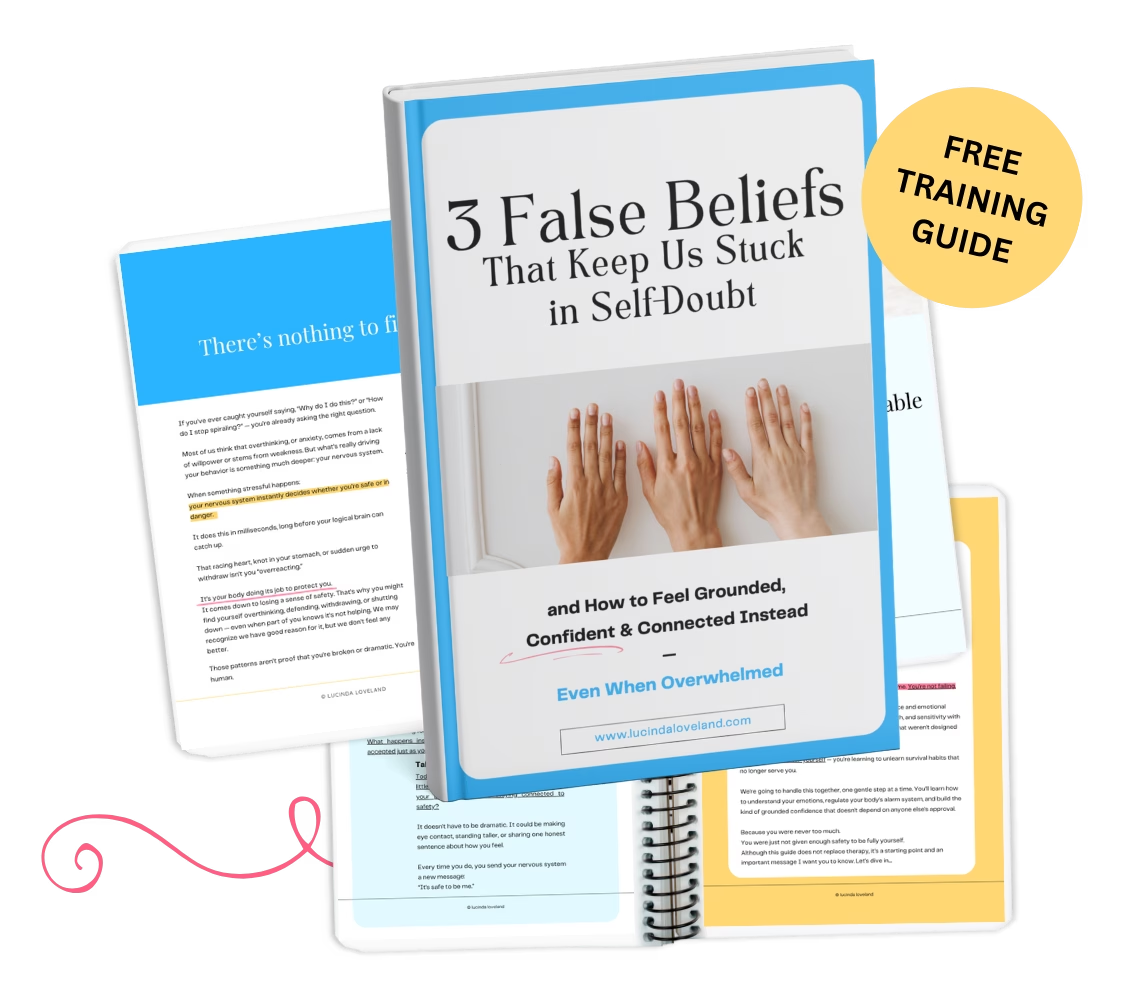
FREE EBOOK
Feel more grounded, confident & connected
This free, therapist-guided ebook debunks the 3 common false beliefs we all fall for no matter how successful we are, and flips them into truths we can use as anchors.